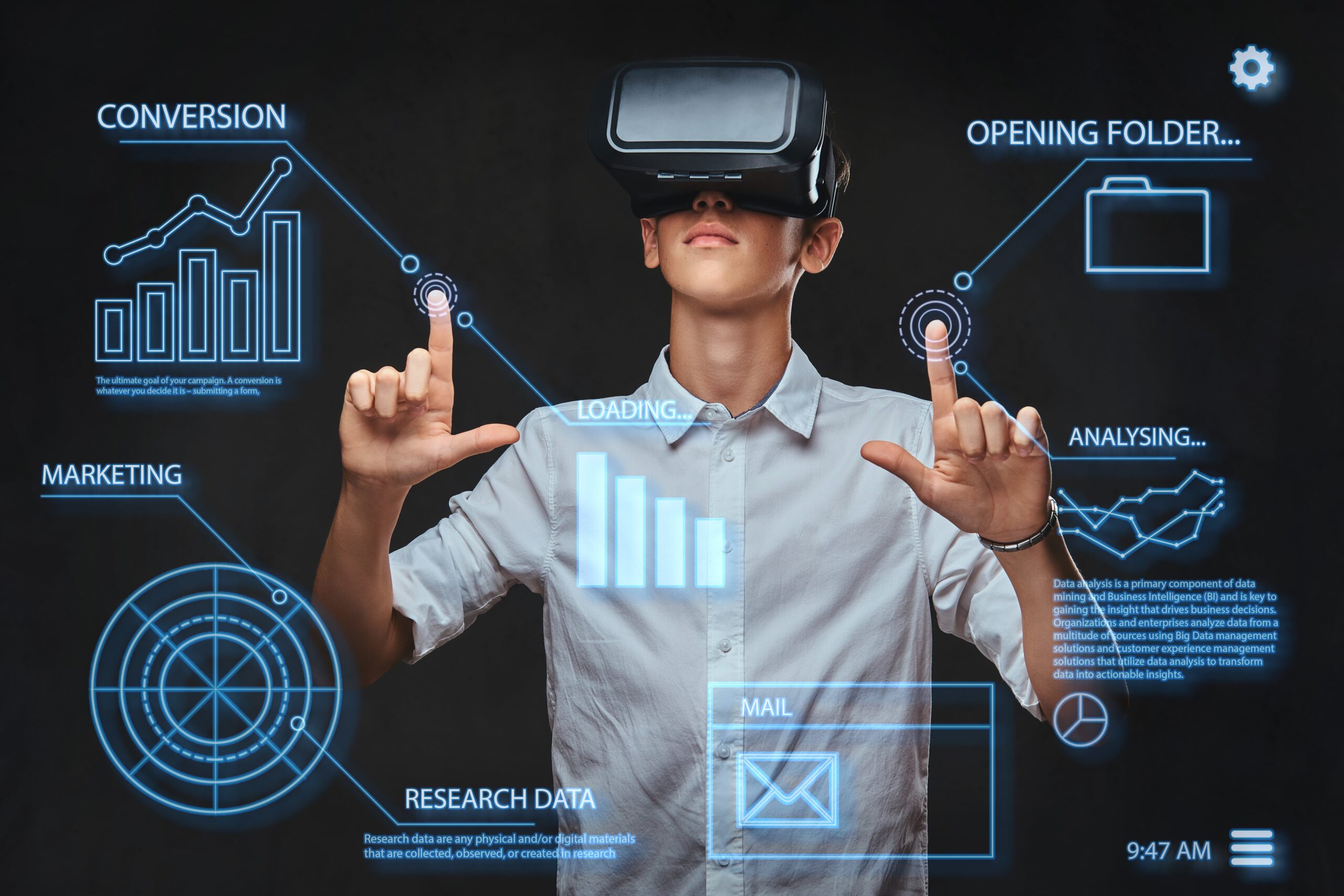
Artificial Intelligence (AI) is revolutionizing digital marketing strategies by providing businesses with advanced tools to enhance customer experience, optimize campaigns, and drive measurable results. From predictive analytics and personalized content recommendations to automated customer service through chatbots, AI is helping marketers make data-driven decisions faster and more accurately.
By analyzing vast amounts of data, AI enables marketers to understand consumer behavior, forecast trends, and create hyper-targeted campaigns that resonate with specific audiences. As a result, businesses can achieve higher engagement rates, improved ROI, and better customer retention. With AI’s growing capabilities, digital marketing is becoming more efficient, adaptive, and focused on delivering value to consumers, setting the stage for the next generation of marketing innovation.
The Impact of AI on Customer Personalization in Digital Marketing
AI is revolutionizing the way brands personalize customer experiences in digital marketing. By leveraging vast amounts of data, AI helps marketers create tailored content and messaging, significantly improving engagement and conversion rates.
- Data-Driven Personalization: AI analyzes consumer behavior, browsing patterns, and purchase history to offer customized recommendations. This results in highly relevant, personalized content, which increases the likelihood of conversions.
- Dynamic Content Creation: AI can create personalized email subject lines, website content, and product suggestions based on an individual’s previous interactions with a brand. This dynamic content adjusts in real-time, keeping customers engaged.
- Customer Journey Mapping: AI tracks the customer journey across various touchpoints, helping marketers understand where customers are in their buying process. This enables the creation of highly targeted messages that match the customer’s current needs.
- Predictive Analytics: AI uses predictive models to forecast future customer behavior, helping brands proactively engage with customers through personalized offers, content, or product recommendations.
- Enhanced Retargeting: AI enhances retargeting efforts by analyzing the probability of a user converting based on their past interactions. Personalized ads or follow-up emails can be automated to increase conversion chances.
AI’s ability to tailor experiences at an individual level boosts customer satisfaction, loyalty, and ultimately, revenue. Businesses using AI-driven personalization can better meet customer expectations, which leads to stronger brand relationships and more effective marketing strategies.
Related Article:- Email Marketing Best Practices to Boost Engagement & Conversions
How AI-Powered Analytics Improve Marketing Campaigns?
AI-powered analytics is transforming digital marketing by providing deeper insights and actionable data that optimize campaigns for better performance.
- Real-Time Insights: AI tools can process large datasets in real-time, enabling marketers to track campaign performance instantly. This allows for quicker adjustments to strategy, ensuring that marketing efforts remain efficient and effective.
- Enhanced Audience Segmentation: AI analyzes customer demographics, interests, and behaviors to identify distinct audience segments. This segmentation allows marketers to create highly targeted campaigns that resonate with specific groups.
- Predictive Analytics for Campaign Optimization: AI models predict the success of marketing campaigns by analyzing historical data and trends. This helps marketers optimize budget allocation, ad placement, and messaging for maximum impact.
- Sentiment Analysis: AI-powered tools can track consumer sentiment on social media and across the web, providing valuable insights into customer opinions and emotions toward a brand. This helps marketers adjust their campaigns to better align with customer sentiment.
- Automated Reporting: AI simplifies the reporting process by generating data-driven reports automatically. Marketers can easily monitor KPIs, ROI, and campaign performance, enabling quicker decision-making and reducing manual effort.
By automating data analysis, AI enables marketers to make more informed decisions, refine their strategies, and ultimately drive better results. With AI-powered analytics, businesses can continuously improve their campaigns and stay ahead of the competition.
Related Article:- How to Automate Your Digital Marketing Campaigns with AI?
AI Tools Every Digital Marketer Should Leverage in 2026
As AI continues to evolve, marketers can leverage a variety of AI tools to streamline processes, improve customer engagement, and enhance campaign effectiveness. Here are some top AI tools that every digital marketer should consider:
- Chatbots and Conversational AI: Tools like Drift, Intercom, and Chatfuel enable businesses to provide 24/7 customer support, answer FAQs, and guide customers through their buying journey. These tools can significantly improve customer service and lead generation.
- AI-Powered Content Creation Tools: Platforms like Copy.ai, Jasper, and Writesonic use AI to generate high-quality written content, blog posts, social media captions, and product descriptions. These tools save time and effort while ensuring consistent content output.
- Predictive Analytics Tools: Tools like HubSpot, Salesforce Einstein, and Google Analytics 4 integrate AI to predict customer behavior and optimize marketing campaigns. Marketers can use these tools to forecast sales trends, engagement levels, and customer lifetime value.
- AI for Social Media Management: Platforms such as Hootsuite and Buffer utilize AI to schedule posts, monitor social conversations, and analyze social media performance. These tools help marketers optimize their social media strategy based on real-time engagement.
- AI-Powered Ad Optimization Tools: Tools like Adext AI and Albert.ai use machine learning to automatically optimize paid ads. They can adjust bids, target new audiences, and improve ad copy based on campaign performance.
By integrating these AI tools into their strategies, marketers can save time, enhance productivity, and increase the precision of their efforts. As AI technology advances, the range of available tools will continue to expand, offering even more opportunities for marketers to stay competitive.
Related Article:- The Future of Influencer Marketing: Trends Brands Must Know
The Future of AI in Digital Marketing: Trends and Predictions
AI is not only reshaping digital marketing today, but it’s also setting the stage for significant changes in the future. Here are key trends and predictions on how AI will continue to influence digital marketing:
- Hyper-Personalization: In the future, AI will take personalization to new heights by creating individualized experiences across all touchpoints, including email, websites, social media, and product recommendations. Marketers will be able to deliver content that is almost perfectly tailored to each customer’s preferences and behaviors.
- Voice Search Optimization: As voice-activated devices like Alexa and Siri become more common, AI will play a crucial role in optimizing content for voice search. Marketers will need to adapt their SEO strategies to focus on natural language and conversational queries.
- AI-Driven Video Marketing: Video content is expected to become even more important in 2026, with AI enabling marketers to create personalized video content at scale. AI tools will assist in automating video editing, personalization, and even real-time video content adaptation based on viewer preferences.
- AI-Powered Influencer Marketing: Influencer marketing will evolve with AI tools that can identify the most relevant influencers, track engagement metrics, and optimize campaigns. AI will help brands work with influencers whose audiences align with their target demographic, improving ROI.
- Increased Automation: Marketing automation driven by AI will expand, automating tasks such as content creation, campaign management, and customer segmentation. This will allow marketers to focus on strategy while AI handles the repetitive and time-consuming tasks.
As AI technology continues to develop, the future of digital marketing will be more efficient, data-driven, and hyper-targeted. The brands that embrace AI now will be in the best position to stay ahead in this rapidly evolving landscape.
Related Article:- Top 5 Business Tools Every Startup Should Use in 2025
Conclusion
AI is undeniably transforming digital marketing strategies by providing advanced tools that enhance personalization, optimize campaigns, and improve overall efficiency. From predictive analytics and automated content creation to AI-driven customer support and real-time insights, businesses that embrace AI technologies are gaining a competitive edge in an increasingly data-driven landscape. As AI continues to evolve, marketers will have even more opportunities to refine their strategies, deliver more relevant experiences to customers, and achieve greater ROI. Adopting AI in digital marketing is no longer a luxury—it’s a necessity for brands aiming to thrive in the future of marketing.
FAQs
1. How does AI improve customer personalization in digital marketing?
AI enhances customer personalization by analyzing data, predicting behavior, and delivering tailored content, product recommendations, and offers, creating more relevant experiences that increase engagement, loyalty, and conversions.
2. What are the key benefits of AI-powered analytics in marketing campaigns?
AI-powered analytics provide real-time insights, audience segmentation, predictive forecasting, and sentiment analysis, allowing marketers to optimize campaigns for better performance, higher ROI, and more precise decision-making.
3. Which AI tools are most effective for digital marketers in 2026?
Top AI tools for digital marketers in 2026 include chatbots (Drift), content generation (Jasper), predictive analytics (HubSpot), and social media management (Hootsuite), all of which streamline processes and enhance results.
4. What role does AI play in the future of digital marketing?
AI will drive hyper-personalization, voice search optimization, automated video marketing, and influencer strategy refinement, transforming how businesses engage with customers and optimize campaigns for future success.
5. How can AI help marketers optimize paid advertising campaigns?
AI optimizes paid advertising by automating bidding, targeting the right audiences, and analyzing performance metrics to adjust strategies in real-time, improving ad relevance and maximizing ROI for advertisers.